Home
Home English
 عربى
عربى Español
 русский
 Français
 中文简体
中文简体Overview of LED Emergency Light Applicability in Different Environments
LED emergency lights, as an important emergency lighting device, are widely used in various environments to ensure safe lighting during power outages or emergencies. Their applicability is influenced by many factors, including environmental conditions, installation requirements, frequency of use, and device performance. This article will detail the application characteristics and applicability of LED emergency lights in indoor, outdoor, industrial, and special environments, helping users fully understand the actual usage and selection criteria of these products.
Applicability of LED Emergency Lights in Indoor Environments
Indoor environments are one of the most widely used environments for LED emergency lights, including homes, office buildings, shopping malls, schools, and hospitals. Because indoor environments generally have relatively stable temperature and humidity conditions, LED emergency lights perform relatively stably in such environments. LED lamps can automatically switch to emergency lighting during a power outage, providing sufficient brightness to support safe evacuation and basic activities. They come in a variety of designs to coordinate with interior decor. Indoor emergency lights are often installed in key locations such as corridors, stairwells, and exits, requiring a long battery life and a reliable charging system. Furthermore, indoor environments have relatively low requirements for dust and moisture resistance, but the lamps must still function properly in dusty or occasionally humid environments.
Suitability of LED Emergency Lights for Outdoor Environments
Outdoor environments are relatively complex, with significant temperature fluctuations and potential exposure to natural factors such as rain, wind, sand, and ultraviolet rays. When used outdoors, LED emergency lights must exhibit strong waterproof and dustproof properties, typically adopting an IP65 or higher rating to ensure proper operation in rainy, snowy, or dusty environments. Outdoor emergency lights are commonly used for emergency lighting in roads, squares, parking lots, and other public spaces. They require a wide illumination range and high luminous flux to meet the lighting needs of larger spaces. Furthermore, the housing material must be corrosion-resistant and able to withstand long-term UV exposure to prevent material degradation that affects its service life. For outdoor installations, the stability of the power supply and charging efficiency are also important considerations. Some products support solar charging, making them suitable for emergency lighting in areas without a power source.
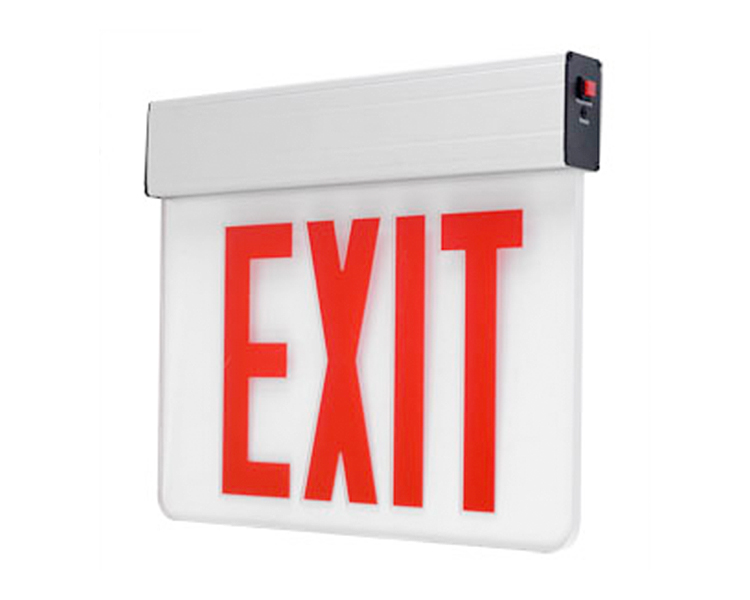
The suitability of LED emergency lights in industrial environments
In industrial environments, LED emergency lights must meet demanding operating conditions, such as high temperatures, high humidity, high dust concentrations, and the presence of corrosive gases. Industrial emergency lights are typically more robust, with higher mechanical strength and protection levels to withstand mechanical shock and vibration. When used in factory workshops, warehouses, mines, and other locations, these lights must ensure continuous emergency lighting even in extreme conditions, ensuring production safety and personnel evacuation. Due to the unique characteristics of industrial sites, emergency lights may also require explosion-proof certification to prevent accidents caused by electrical sparks. In industrial environments, emergency lights have stricter maintenance cycles and testing requirements to ensure equipment reliability during critical moments.
The suitability of LED emergency lights in special environments
Special environments such as medical facilities, laboratories, tunnels, subways, and areas prone to flammable and explosive materials place higher demands on the performance and safety of LED emergency lights. Emergency lights in medical facilities must meet hygiene standards and be dust-free and easy to clean to avoid environmental pollution. Laboratories and pharmaceutical plants require lighting made of harmless materials and non-interfering with the experimental environment. Emergency lighting in tunnels and subways requires high brightness and uniform illumination to support emergency evacuation and provide route guidance. LED emergency lights for use in flammable and explosive environments must undergo strict explosion-proof certification to ensure they do not generate sparks or overheat during operation. In special environments, lights are often equipped with multiple safety features and monitoring systems to provide real-time status monitoring.
Analysis of Factors Influencing the Applicability of LED Emergency Lights
The applicability of LED emergency lights is influenced by a variety of factors, including ambient temperature and humidity, power supply stability, IP65 protection level, mechanical strength, optical performance, and safety certifications. Environments with large temperature and humidity fluctuations can affect battery life and electronic component performance, necessitating the use of lights with a wide temperature range. Unstable power supply or frequent outages pose challenges to charging circuits, necessitating efficient charging and protection circuits. The IP65 protection level directly affects the light's ability to withstand dust and water intrusion, impacting its lifespan and safety. Mechanical strength and vibration resistance determine the light's durability in harsh environments. Optical performance influences lighting effectiveness and evacuation efficiency. Safety certifications such as explosion-proof, fireproof, and medical-grade certifications ensure the safe and compliant use of lighting in special environments.
LED Emergency Light Performance Comparison Table for Different Environments
| Environment Type | Temperature & Humidity Requirements | Protection Rating | Main Functional Requirements | Installation Location | Remarks |
|---|---|---|---|---|---|
| Indoor | Stable, moderate | IP20~IP44 | Automatic switching, moderate battery life | Corridors, exits, stairwells | Aesthetic design, low maintenance |
| Outdoor | Variable, wide range | IP65 and above | Waterproof, dustproof, long battery life, high luminous flux | Roads, squares, parking lots | Corrosion resistant material, UV resistant |
| Industrial | High temperature & humidity, dusty | IP65~IP67, explosion-proof certification | Shockproof, explosion-proof, durable | Workshops, warehouses, mines | Strict maintenance schedule, safety priority |
| Special Environments | Strict control | Customized according to scenario | Medical grade, dust-free, explosion-proof | Medical facilities, laboratories, tunnels, subways | Meets special standards, safety monitoring |


 NINGBO FEITUO ELECTRIC APPLIANCE CO., LTD.
 0086-574-87387582
 Website: www.ifeituo.com
 info@ifeituo.com
 Mob/WeChat/WhatsApp: 0086-135-6655-7272