Home
Home English
 عربى
عربى Español
 русский
 Français
 中文简体
中文简体Basic components of the twin spot emergency light power supply system
The power supply system of the twin spot emergency light is mainly composed of mains power supply, built-in batteries and charging control circuits. This design ensures that the lamp can be charged under normal power supply conditions, and can rely on the battery to provide continuous lighting when the power is off. The mains power supply is responsible for providing stable power for the entire system, while the battery is used as a backup power supply to ensure the lighting needs in emergency conditions. The charging control circuit monitors and regulates the battery charging and discharging status to prevent overcharging or over-discharging and extend the battery life.
Performance of stability in the twin spot emergency light power supply system
Stability is one of the key indicators for evaluating the performance of the twin spot emergency light power supply system. The system must be able to cope with a variety of complex situations such as mains voltage fluctuations, frequency changes and instantaneous power outages. To achieve this goal, modern twin spot emergency lights are usually equipped with a voltage stabilizer or voltage stabilization module to ensure stable output of the power supply voltage to avoid flickering or extinguishing of the lamp due to unstable voltage. In addition, the charging control module in the power supply system effectively reduces the risk of battery failure by intelligently managing the battery status, thereby improving overall stability.
Measures to ensure continuity
Continuity refers to the length of time that a twin spot emergency light can continue to provide lighting in the event of a power outage. Generally speaking, battery capacity and circuit design are the main factors affecting continuity. In order to meet different application scenarios, twin spot emergency lights are usually equipped with lithium batteries or lead-acid batteries with moderate capacity, which can ensure the normal operation of the lamps for several hours after a power outage. At the same time, energy-saving strategies are considered when designing the power system, such as low-power standby mode and intelligent dimming functions, to extend battery life and ensure sufficient lighting at critical moments.
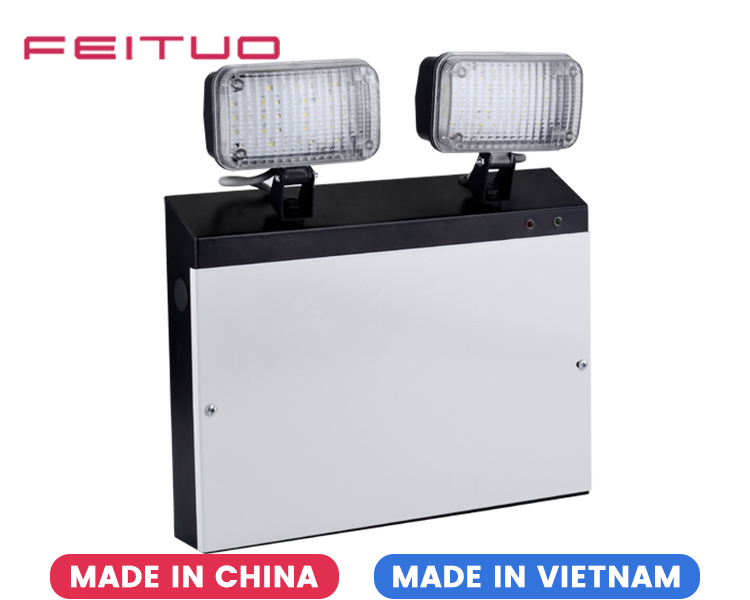
Battery types and their impact on stability and continuity
The batteries used in twin spot emergency lights mainly include three types: nickel-metal hydride batteries, lead-acid batteries and lithium-ion batteries. Lead-acid batteries have low cost, but are heavy and have limited cycle life; nickel-metal hydride batteries have good environmental performance, but low energy density; lithium-ion batteries have gradually become the mainstream choice due to their small size, light weight and long life. Different battery types differ in battery capacity, charge and discharge efficiency and maintenance requirements, which directly affect the stability and continuity of the power system.
The key role of charging control technology
The charging control circuit not only ensures the normal charging and discharging of the battery, but also monitors the health status of the battery to avoid system failures caused by overcharging, overdischarging, battery overheating, etc. Intelligent charging technology adapts to the charging characteristics of different batteries through multi-stage charging strategies, reduces damage to the battery, and improves the battery life cycle. In addition, some twin spot emergency lights are also equipped with a self-test function, which can regularly detect the battery status and circuit performance, timely discover potential hidden dangers, and improve the reliability of the system.
The response speed and impact of power failure switching
When the city power is cut off, the power system must quickly switch to battery power to ensure that emergency lighting is not interrupted. Too slow a response speed may cause a short period of darkness, affecting safety. Twin spot emergency lights are usually designed with a fast switching circuit, and the response time can be controlled at the millisecond level, so as to achieve a seamless transition and ensure the continuity of lighting in emergency situations. This performance is directly related to the overall performance of the power system and the user experience.
Consideration of the adaptability of the power system to the environment
Emergency lights are often used in a variety of environments, including indoor and outdoor, humid, dusty and other complex scenes. When designing the power system, the protection level and durability must be considered to ensure that electronic components and batteries can work normally under different temperature and humidity conditions. Reasonable heat dissipation design and sealing structure can help extend the life of the power system, avoid failures caused by environmental factors, and ensure stable and continuous power supply.
The role of maintenance and testing in protecting the performance of the power system
Maintenance and testing are effective means to ensure the stability and sustainability of the twin spot emergency light power system. Regularly checking the battery voltage, charge and discharge status, and charging control module function, and replacing aging batteries in time can prevent failures caused by battery performance degradation. At the same time, the system self-check function can help users to grasp the operating status of the equipment in a timely manner, arrange necessary maintenance work, reduce the risk of accidental failure, and ensure that the lamps can function normally in emergency situations.
Energy consumption management and energy-saving performance of the power system
Reasonable energy consumption management is an important aspect of improving the sustainability of the power system. The twin spot emergency light reduces power consumption and extends battery life in non-emergency conditions by optimizing circuit design and using energy-saving light sources. Some products use intelligent dimming technology to automatically adjust the output according to the ambient brightness to avoid energy waste. In addition, standby power consumption control technology also helps to reduce daily energy consumption and improve the overall economy of the power system.
Typical twin spot emergency light power system parameter comparison table
| Parameter | Description | Typical Value | Unit |
|---|---|---|---|
| Input Voltage | Operating input voltage range | 100-240 | V |
| Battery Type | Common battery options | Lithium-ion / Lead-acid | - |
| Battery Capacity | Energy storage capacity | 3.6 - 12 | Ah |
| Charging Time | Time to fully charge battery | 6 - 12 | hours |
| Emergency Working Time | Duration of lighting after power loss | 2 - 4 | hours |
| Response Time | Switching time from mains to battery | < 20 | milliseconds |
| Operating Temperature | Suitable temperature range | -10 to 50 | °C |
| Protection Rating | Dust and water resistance | IP20 - IP65 | - |
Future power system technology development trend
With the advancement of technology, the power system of twin spot emergency lights is developing in a more intelligent and integrated direction. The application of new lithium battery technology and fast charging technology has improved the battery life and charging efficiency. The integrated intelligent management chip can achieve more accurate battery status monitoring and fault diagnosis, and enhance system stability. In addition, combined with the Internet of Things technology, it is gradually possible to realize remote monitoring and maintenance of the power system, which improves the convenience and response speed of emergency light management.


 NINGBO FEITUO ELECTRIC APPLIANCE CO., LTD.
 0086-574-87387582
 Website: www.ifeituo.com
 info@ifeituo.com
 Mob/WeChat/WhatsApp: 0086-135-6655-7272