Home
Home English
 عربى
عربى Español
 русский
 Français
 中文简体
中文简体If you’ve ever talked to customers about LED emergency lights, you’ve probably heard something like this:
“We hope we never need it… but if something happens, it has to work.”
That one sentence sums up the entire emergency lighting business.
LED emergency lights are not products people get excited about every day. They don’t improve productivity, they don’t decorate a space, and they don’t get turned on for fun. But when power goes out, smoke fills the air, or visibility drops to zero, they suddenly become the most important lights in the building.
So let’s stop talking about them in abstract terms and answer the real questions customers actually care about.
What Is an LED Emergency Light, Really?
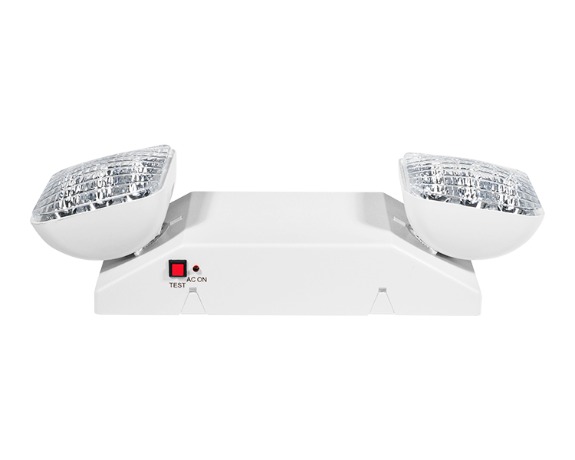
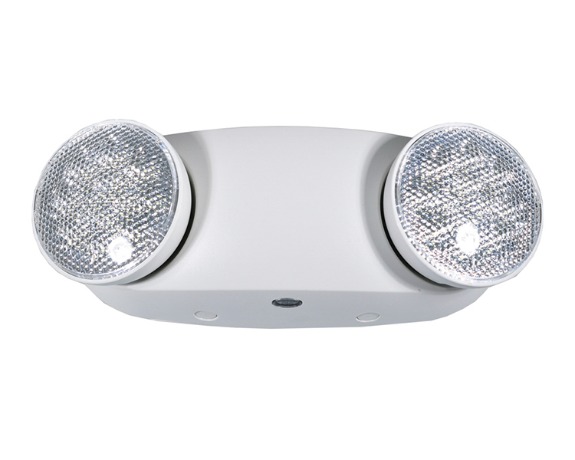
At its core, an LED emergency light is a backup lighting device designed to turn on automatically when normal power fails.
That’s it. No complicated definition.
It usually includes an LED light source, a built-in rechargeable battery, and a control circuit that monitors power status.
 |
 |
When mains power is normal, the light stays off or works in standby mode and the battery charges quietly in the background. When power is cut, whether from a blackout, fire, or electrical failure, the emergency light switches on by itself.
No switches. No human action required.
And that automatic response is exactly why it exists.
Why Is This So Important?
Most customers don’t think about lighting until it’s gone.
But in real emergency situations, darkness creates problems instantly. People panic, exits become hard to find, stairs and obstacles turn dangerous, and evacuation slows down or stops.
Emergency lights don’t prevent accidents. They prevent chaos.
From a manufacturer’s point of view, the key value isn’t brightness alone. It’s reliability under the worst conditions.
No power. No instructions. No second chances.
That’s why emergency lighting is often required by building codes, fire regulations, and safety standards in many regions. It’s not about paperwork. It’s about keeping people moving safely when everything else fails.
When Do You Actually Use an LED Emergency Light?
This is where many buyers misunderstand the product.
They assume emergency lights are rarely used. In reality, they are always working in the background, just not visibly.
Common real-world situations include power outages during storms, electrical failures in factories or warehouses, fire-related shutdowns, maintenance-related power cuts, and night-time blackouts in residential or commercial buildings.
Emergency lights are especially critical in stairwells, corridors, exit routes, basements, parking areas, and industrial facilities.
If normal lighting goes off and people hesitate for even a few seconds, that’s already a problem. Emergency lighting exists to remove that hesitation.
How Does an LED Emergency Light Work?
Customers often ask, “Is it complicated?”
Actually, the concept is very straightforward.
Normal Power Mode
The light is connected to mains power. The battery charges slowly and safely. The LED stays off or in standby.
Power Failure Detected
The internal circuit senses the loss of voltage immediately.
Automatic Switch to Battery Power
The LED turns on using stored battery energy.
Emergency Runtime
The light stays on for a fixed period, usually one to three hours, depending on design and battery capacity.
LED technology makes this process far more efficient than older solutions. LEDs consume less power, generate less heat, and provide stable light output for longer periods.
What Are the Real Advantages of LED Emergency Lights?
Let’s avoid buzzwords and focus on practical benefits.
Low Power Consumption
LEDs use very little energy, which means smaller batteries, longer emergency runtime, and lower long-term operating costs.
Long Service Life
LED chips last far longer than traditional light sources. That reduces replacement frequency and maintenance headaches.
Instant Full Brightness
There is no warm-up time. When power fails, light appears immediately.
Compact Design Options
Because LEDs and batteries are smaller, emergency lights can be slim, discreet, and easier to install.
Are There Any Trade-Offs or Limitations?
Yes, and being honest about them builds trust.
Battery Aging Is Real
No battery lasts forever. Over time, capacity drops, especially if charging circuits are poorly designed, ambient temperatures are too high, or maintenance is ignored.
Not All LED Emergency Lights Are the Same
Brightness, runtime, and reliability vary widely between products. A low-cost unit may meet basic specs on paper but perform poorly in real emergencies.
Installation Matters
Even the best emergency light will not help if it is installed in the wrong place or wired incorrectly.
What Should Buyers Pay Attention To?
These are the questions customers ask most often, and the ones that actually matter.
How long does the emergency light stay on during a power failure? What type of battery is used, and how easy is it to replace? Is the light output sufficient for evacuation, not just visibility? Does it meet local safety or fire regulations? How stable is the product after years of use, not just on day one?
One customer once said something very honest:
“I don’t care how it looks. I care whether it works when everything else doesn’t.”
From a Manufacturer’s Perspective: Why Quality Matters More Here
Emergency lights are not like decorative lighting or general illumination products.
If a decorative light fails, people complain. If an emergency light fails, people get hurt.
That’s why responsible manufacturers focus on stable electronic design, reliable battery sourcing, consistent quality control, and real-world testing.
Because in this category, failure is not an option.
Final Thoughts: Do LED Emergency Lights Really Matter?
Most people hope they’ll never need them.
But when they do, nothing else can replace them.
LED emergency lights don’t try to stand out. They don’t ask for attention. They just wait quietly, ready for the moment when visibility, safety, and time suddenly matter more than anything else.
And that’s exactly why every serious building, facility, and manufacturer treats them as a necessity, not an accessory.


 NINGBO FEITUO ELECTRIC APPLIANCE CO., LTD.
 0086-574-87387582
 Website: www.ifeituo.com
 info@ifeituo.com
 Mob/WeChat/WhatsApp: 0086-135-6655-7272