Home
 English
 عربى
 Español
 русский
 Français
 中文简体
A maintenance team replacing 40 fluorescent tubes in a parking garage usually starts with a lamp price. The more expensive decision is whether the fixture keeps its ballast. Type A LED tubes are ballast-compatible drop-ins; Type B tubes are ballast-bypass lamps that run directly on line voltage. Pick Type A when the existing ballasts are healthy, listed as compatible, and you want a fast lamp-for-lamp swap. Pick Type B when the ballasts are aging, you can de-energize and rewire the fixture, and you want to remove a future failure point. The wrong match creates compatibility, labor, and safety problems that cost more than the tubes.
What Type A and Type B actually mean
Type A is often called plug-and-play or direct-fit. The existing fluorescent ballast stays in the circuit and regulates current, and the LED tube is designed to work with a published list of ballasts. That list matters. A ballast that is electrically compatible on paper may still be too old, too hot, or too far outside the tube maker's tested range. Type A is convenient, but it is not a universal replacement for every fluorescent fixture.
Type B is ballast-bypass or direct-wire. The ballast is removed, and line voltage feeds the sockets through the tube's internal driver. There is no ballast compatibility list to check, but the fixture wiring becomes the critical issue. Many Type B installations require non-shunted sockets, correct polarity, and a clear label inside the fixture. Type B is also sold in single-ended and double-ended designs, and the wiring method must follow the tube instructions exactly.
There is also Type C, which uses an external driver. Most A-versus-B decisions are simpler: keep the ballast, or remove it. That choice affects installation labor, maintenance, safety, and emergency-lighting compatibility more than the tube's claimed lumen output.
Side-by-side comparison
| Feature | Type A | Type B |
|---|---|---|
| Electrical path | Existing ballast stays in circuit and regulates current | Ballast is removed; line voltage feeds the sockets |
| Installation labor | Lamp swap plus ballast compatibility check | Lockout/tagout, ballast removal, rewiring, and verification |
| Compatibility check | Ballast model, lamp length, wattage, voltage, and socket type | Fixture wiring, socket type, voltage, and single- or double-ended design |
| Maintenance | Ballast remains a wear item; keep spares | Removes ballast failures; line voltage remains at sockets |
| Safety focus | Verify the ballast is compatible and not failing | Verify de-energization, labeling, polarity, and socket condition |
| Best fit | Healthy ballasts, phased replacement, low downtime | Failing ballasts, planned retrofit, qualified labor |
| Emergency circuit | Check ballast and inverter compatibility | Check emergency driver or battery-pack compatibility |
The retrofit decision tree
Use this simple tree before ordering. It keeps the decision focused on the fixture, not just the lamp catalog.
- Is the existing ballast healthy and on the tube manufacturer's compatibility list?
- Yes, and downtime must stay low: Type A is usually the lower-labor choice.
- No, or the ballast model is unknown: continue.
- Can a qualified electrician de-energize and rewire the fixture?
- Yes: Type B removes the ballast and its future failure point.
- No: replace the ballast and use a compatible Type A tube, or replace the fixture.
Installation, safety, and code details that get missed
For Type A, read the ballast label and the tube compatibility list together. Check input voltage, typically 120 V or 277 V in North American commercial fixtures, along with frequency, lamp length, and socket type. A failing ballast can shorten tube life or create flicker and overheating. Type A reduces rewiring exposure during installation, but it leaves the ballast in the circuit as a future failure point.
For Type B, the work starts with lockout/tagout. Remove the ballast completely, confirm the sockets are correct for the tube design, and verify polarity before energizing. Label the fixture clearly. The biggest post-installation risk is a future technician who assumes the fixture still has a ballast and installs the wrong lamp. A label is not decoration; it is part of the electrical safety system.
Neither type is universally safer. Type A avoids rewiring during the swap but depends on the ballast. Type B removes the ballast but puts line voltage at the sockets. The safer choice is the one that matches the fixture, the available labor, and the local electrical code.
Where each type fits best
Type A works well in offices, retail spaces, schools, and phased maintenance programs where ballasts are healthy and compatible. It keeps downtime short and lets maintenance teams replace lamps without opening the fixture wiring. The trade-off is inventory discipline: you still need ballast spares and a way to verify compatibility when fixtures change.
Type B fits warehouses, parking garages, older buildings, and planned lighting retrofits where ballasts are already failing or past their expected service life. It can reduce future ballast maintenance, but it only makes sense when the rewiring is planned, inspected, and labeled. Do not mix Type A and Type B tubes in the same fixture or in unlabeled fixtures. A mixed spare-parts bin is a common source of callbacks.
If you need a refresher on how ballasts differ from other control gear, this note on emergency ballast differences is useful for procurement teams.
Emergency lighting and exit signage: the hidden variable
In egress paths, the tube is only one part of the assembly. Emergency illumination must remain at the required duration, often 90 minutes, and exit signs must stay visible. A Type A retrofit may interact with an emergency ballast or inverter. A Type B retrofit may remove the ballast but still need a compatible emergency driver or battery pack. Check the emergency circuit, not just the normal lighting circuit.
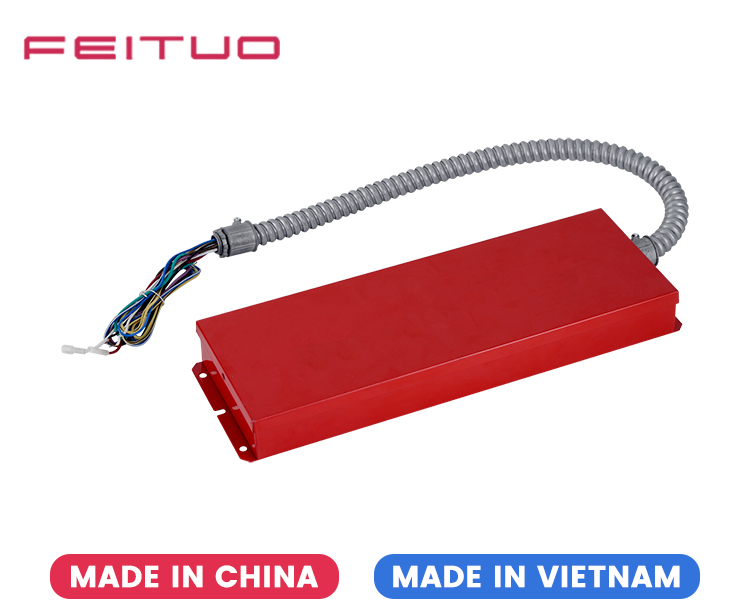 JLEB Series 20W LED Emergency Battery PackFor egress and retrofit projects, this UL/cUL listed 20W internal battery pack provides 90-minute emergency output and dual-voltage options.View Product →
For OEM fixtures and retrofit kits, a UL/cUL listed emergency battery pack can simplify compliance review because the power source is evaluated as part of the emergency system. The tube type still has to match the fixture wiring and the emergency operating mode. If the fixture is on a generator or central inverter, confirm how the tube behaves during transfer and whether the emergency circuit remains within the tube's rated input range.
Procurement checklist for mixed fleets
- Record the ballast model, lamp length, socket type, and input voltage before choosing Type A.
- For Type B, confirm who will rewire the fixture and how it will be labeled.
- Check emergency circuit requirements, including required duration and exit sign visibility.
- Do not mix Type A and Type B tubes in the same fixture or in unlabeled fixtures.
- Keep ballast spares for Type A sites, or standardize Type B and train maintenance staff.
- Confirm the tube and emergency power components are listed for the application and local code.
The lowest purchase price often loses to labor and callbacks. A Type B conversion that removes a failing ballast can be cost-effective in a planned retrofit, but only when the rewiring is done correctly. A Type A swap that takes minutes can be the better choice in an occupied building with healthy ballasts and documented compatibility.
A practical recommendation
Choose Type A for maintenance replacements where ballasts are healthy and compatibility is documented. Choose Type B for planned retrofits where ballasts are failing, the circuit can be rewired, and fixtures will be labeled. If the fixture is on an emergency circuit, verify the emergency power path before buying either type. The tube type is a system decision, not a lamp-only decision.


 NINGBO FEITUO ELECTRIC APPLIANCE CO., LTD.
 0086-574-87387582
 Website: www.ifeituo.com
 info@ifeituo.com
 Mob/WeChat/WhatsApp: 0086-135-6655-7272