Home
Home English
 عربى
عربى Español
 русский
 Français
 中文简体
中文简体At 6:15 on a Thursday morning, the maintenance supervisor of a twelve-story office building walks the second-floor corridor with a flashlight. That corridor should be covered by emergency luminaires, but the fixture outside the elevator lobby is dark. The unit passed its last documented inspection eight months ago; the log sheet had clean check marks and the green charging LED was glowing. Nobody had actually held the test button for thirty uninterrupted seconds in nearly a year.
That scenario repeats in commercial buildings every week. Emergency light testing gets skipped, shortened, or signed off without being performed, and the consequences only appear when the grid fails. Testing is not a paperwork exercise. It is a concrete verification process that takes a few minutes per unit each month, plus ninety minutes once a year. This guide covers the code requirements, the step-by-step procedures, and the equipment decisions that determine whether your units pass or fail.
What Emergency Light Testing Actually Verifies
A successful emergency light test confirms three things: the transfer switch shifts the lamp from mains power to battery backup, the lamp produces its rated light output, and the battery holds enough charge for the full required duration.
The transfer switch is the relay inside the fixture that detects a mains failure and connects the lamp to the battery. It must operate within seconds of a power loss. The lamp itself, usually LED in modern units, must stay bright and stable for the entire test. Battery capacity is the hidden variable: a lamp that lights for thirty seconds on a monthly check can still go dark at minute forty during a ninety-minute discharge. That is exactly why the annual test exists.
A fixture that passes its monthly test but fails the annual test is almost always suffering from battery aging rather than a sudden electrical fault. Understanding how the system works helps you interpret the symptoms. For a deeper look, our emergency lighting knowledge base explains how these components operate together.
Testing Requirements Under NFPA 101 and Common Local Codes
The North American baseline for emergency light testing is NFPA 101, the Life Safety Code. Most state and local fire codes adopt it with few changes. For battery-powered emergency luminaires and exit signs, the core requirements are simple to remember:
| Test type | Frequency | Duration | What it verifies |
|---|---|---|---|
| Monthly functional test | Monthly | 30 seconds | Lamp starts and stays lit; transfer to battery occurs |
| Annual full test | Annually | 90 minutes | Battery delivers full rated capacity under load |
| Exit sign illumination check | Monthly | Visual inspection | Letters remain legible and evenly illuminated |
Facilities outside North America that follow IEC or European standards may see slightly different intervals, but the 30-second monthly check and the 90-minute annual discharge are widely accepted as a sound baseline. Buildings that use generator backup instead of battery units follow a different set of procedures, typically defined by the local fire code. Always confirm the specific schedule with your authority having jurisdiction.
How to Perform the Monthly 30-Second Test
The monthly test catches early failures in the lamp and transfer circuit before a real emergency exposes them. Most fixtures have a push-to-test button on the casing, and the whole routine takes under a minute per unit.
- Locate the test button or key switch on the fixture casing.
- Press and hold it for a full thirty seconds. Do not release early.
- Watch the lamp continuously. It should stay bright with no flicker, dimming, or dropout.
- Release the button and confirm that the fixture returns to normal charging mode with its indicator LED on.
For exit signs, inspect the sign face during the same visit. Look for dark segments in the letters, yellowed acrylic, or missing letters. A sign that looks acceptable from across the room can have a partial LED failure that a close visual check reveals immediately.
How to Perform the Annual 90-Minute Test
The annual test is the only practical way to verify battery capacity. A thirty-second check exercises the relay and the lamp, but it never drains the battery enough to expose a tired cell.
Schedule the annual test so the fixture can remain out of normal service for the full discharge plus the recharge time that follows. Some units have a dedicated test mode that forces emergency operation; others require holding the test switch until the unit latches into battery power. Central test systems can initiate a discharge for a whole bank of fixtures automatically and record the results.
During the ninety minutes, walk the space at set intervals and note any fixture that dims, flickers, or cuts off before the timer ends. Pay special attention to units near the end of their battery service life, typically those older than three years. After the test, allow each unit to recharge completely before placing it back in service; a fully discharged battery can take several hours to return to full charge.
Record the results immediately, including failed units and the corrective actions taken, because that record is what an inspector will ask to see.
Inspection Checklist and Common Failure Patterns
Functional testing catches electrical and battery failures, but a separate visual inspection catches the physical problems that lead to those failures. Combine both on a regular schedule.
Visual inspection points
- Housing and diffuser: look for cracks, heavy dust, or yellowing that reduces light output.
- Battery compartment: open it where possible and check for corrosion, leaking cells, or swollen batteries.
- Wiring terminals: confirm they are tight and free of corrosion.
- Charging indicator: it should be lit when the unit is on charge and behave according to the manufacturer’s design.
- Mounting hardware: the fixture should be firmly secured, with no sagging or vibration.
Functional failure patterns
When units do fail, the causes follow a predictable pattern. The table below lists the failures recorded most often in commercial building inspections.
| Observed failure | Most likely cause | Recommended action |
|---|---|---|
| Lamp flickers or dims during test | Weakened battery or failing charger | Run a full discharge test; replace the battery if capacity is low |
| Unit goes dark before 90 minutes | Aged battery or internal cell failure | Replace the battery pack or the complete fixture |
| Charging indicator stays off | Charger circuit failure | Check input wiring; replace the charger or the unit |
| Lamp does not switch to battery power | Failed transfer relay or wiring | Replace the fixture or the control circuit |
| Exit sign letters partially dark | Failed LED segments or bad panel connection | Replace the panel or the complete sign |
Battery Health: The Leading Cause of Test Failure
Track test failures across a building portfolio and the same component appears again and again: the battery. Nickel-cadmium cells self-discharge over time, lead-acid batteries lose capacity as the plates sulphate, and lithium-ion cells degrade after repeated charge cycles. Even a high-quality battery has a finite service life, typically three to five years in emergency luminaire duty.
The practical implication is that batteries should be replaced on a preventive schedule rather than after a failed annual test. A unit that cannot complete ninety minutes at the three-year mark is not a defective fixture; it is normal battery aging. Keeping a spare battery pack in stock shortens the downtime after a test failure to a single maintenance visit.
When selecting replacement power packs, match the voltage and capacity to the fixture specification and choose UL-listed components for North American installations.
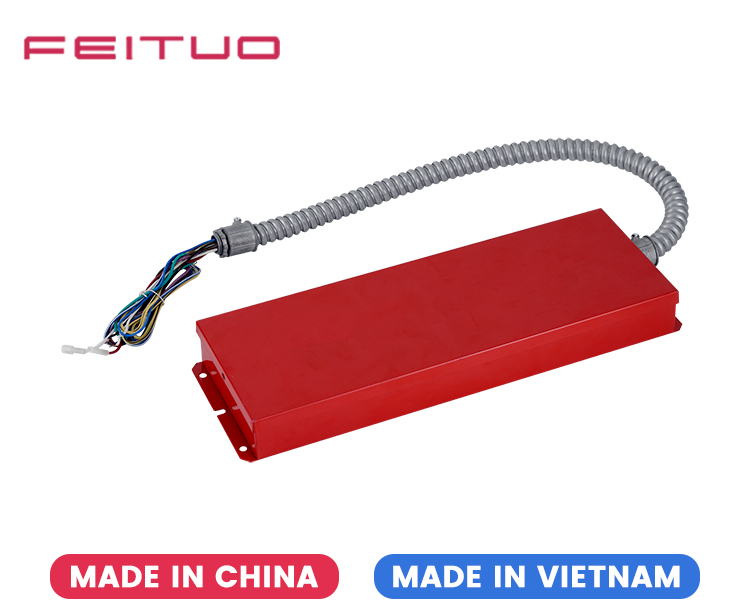 UL Listed LED Emergency Battery Pack for Replacement UseThis battery pack is designed to replace power packs in emergency fixtures, with UL and CULus listing for North American installations. It fits applications like hospitals, hotels, and offices, and supports proper maintenance record keeping for code compliance.View Product →
Record Keeping and Compliance Documentation
NFPA 101 and most local codes require that testing and maintenance records be preserved. These records serve two purposes: they demonstrate compliance during a fire marshal inspection, and they help you spot trends such as a fixture model that consistently fails at the same point in the discharge cycle.
At minimum, maintain a log with the date of each test, the tester’s name, the test type, the result, and any corrective action taken. A spreadsheet is sufficient for most buildings; a dedicated maintenance log app adds convenience but is not required. Identify each fixture by location or asset tag so that history follows the unit, not the building floor.
Choosing Equipment That Passes Year After Year
Across thousands of test cycles, the highest failure rates cluster around fixtures purchased on price alone. Low-cost units often pair a marginal battery with a charger circuit that pushes excessive float voltage, shortening battery life to eighteen months. A UL-listed product has at least passed third-party verification of its components, wiring, and thermal behavior.
For stairwells, corridors, and exit paths where test results land in inspection reports, choose units with documented compliance and a battery design that can be replaced in the field. We build our dual-head emergency lights and exit sign combos with replaceable battery arrangements and UL-listed options, so a failed annual test can usually be corrected with a battery change rather than a full fixture replacement. Our current UL compliance certificate is available for review.
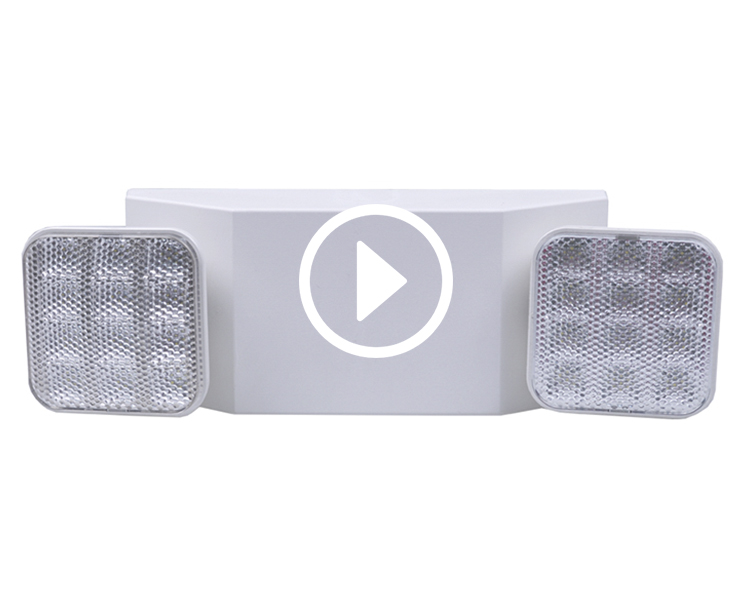 UL Listed Dual-Head Emergency Light with NiCad BatteryThis dual-head emergency light operates on 120 or 277 VAC and uses a long-lasting NiCad battery. It is UL listed and meets NFPA 101, OSHA, and UL 924, making it suitable for corridors and stairwells where documented compliance and field-replaceable batteries are required.View Product →
Exit signs deserve the same level of attention because a dark or partially illuminated exit sign is one of the most common citations in fire safety inspections. Our LED combo units combine an exit sign with adjustable emergency heads and use independent circuits, so a battery failure in one function does not take down the other. That separation matters when an inspector performs a full ninety-minute annual test and expects both the sign and the spotlights to survive it.
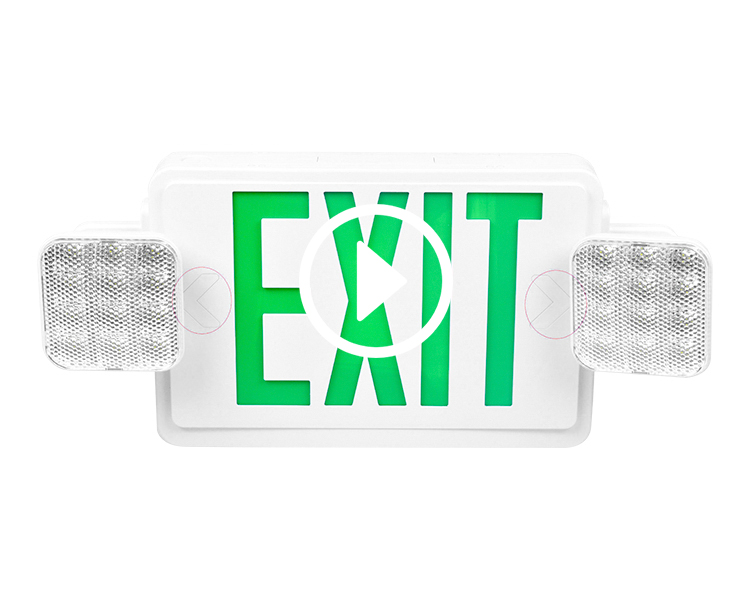 LED Combo Exit Sign with Adjustable Emergency HeadsThis 2-in-1 unit combines an exit sign with adjustable emergency heads on independent circuits, so a battery failure affects only one function. It works on 120 or 277 VAC, is UL listed, and meets NFPA 101, OSHA, and UL 924, ideal for annual testing reliability.View Product →
Emergency light testing is a modest investment: a few minutes per fixture each month and one longer session each year. The payoff is a building that stays illuminated, stays compliant, and keeps people safe when the power goes out.


 NINGBO FEITUO ELECTRIC APPLIANCE CO., LTD.
 0086-574-87387582
 Website: www.ifeituo.com
 info@ifeituo.com
 Mob/WeChat/WhatsApp: 0086-135-6655-7272